Politics has a funny way of reminding leaders that there’s no such thing as a truly private moment anymore. One stray microphone, one unnoticed camera, and suddenly the world gets a raw, unfiltered glimpse into how power really talks behind closed doors. That’s exactly what happened when US President Donald Trump was caught on a hot mic during a conversation with Israeli President Benjamin Netanyahu at his Mar-a-Lago resort in Florida.
The moment was awkward, revealing, and instantly viral. Trump, venting about the Nobel Peace Prize, appeared visibly frustrated about not getting the recognition he believes he deserves. His off-the-cuff remark — “Do I get credit?” — wasn’t just a throwaway line. It reflected years of grievance, ambition, and a deeply personal obsession with legacy. Add to that his repeated claims about preventing war between India and Pakistan, and you’ve got a moment that says a lot about how Trump views his role on the global stage.
This incident wasn’t just political gossip. It reopened debates about Trump’s foreign policy record, his credibility, his relationship with allies, and whether he truly deserves the Nobel Peace Prize he so openly covets. Let’s unpack what happened, why it matters, and what it tells us about power, ego, and modern diplomacy.
The Mar-a-Lago Hot Mic Incident Explained
What Exactly Was Caught on Camera
The exchange took place at Mar-a-Lago, Trump’s Florida resort that has effectively doubled as an informal diplomatic hub. While speaking with Israeli President Benjamin Netanyahu, Trump appeared unaware that a camera was recording nearby. In a candid moment, he began discussing the Nobel Peace Prize, trailing off mid-sentence with, “They gave the Nob…” before pivoting to his familiar claim of easing tensions between India and Pakistan.
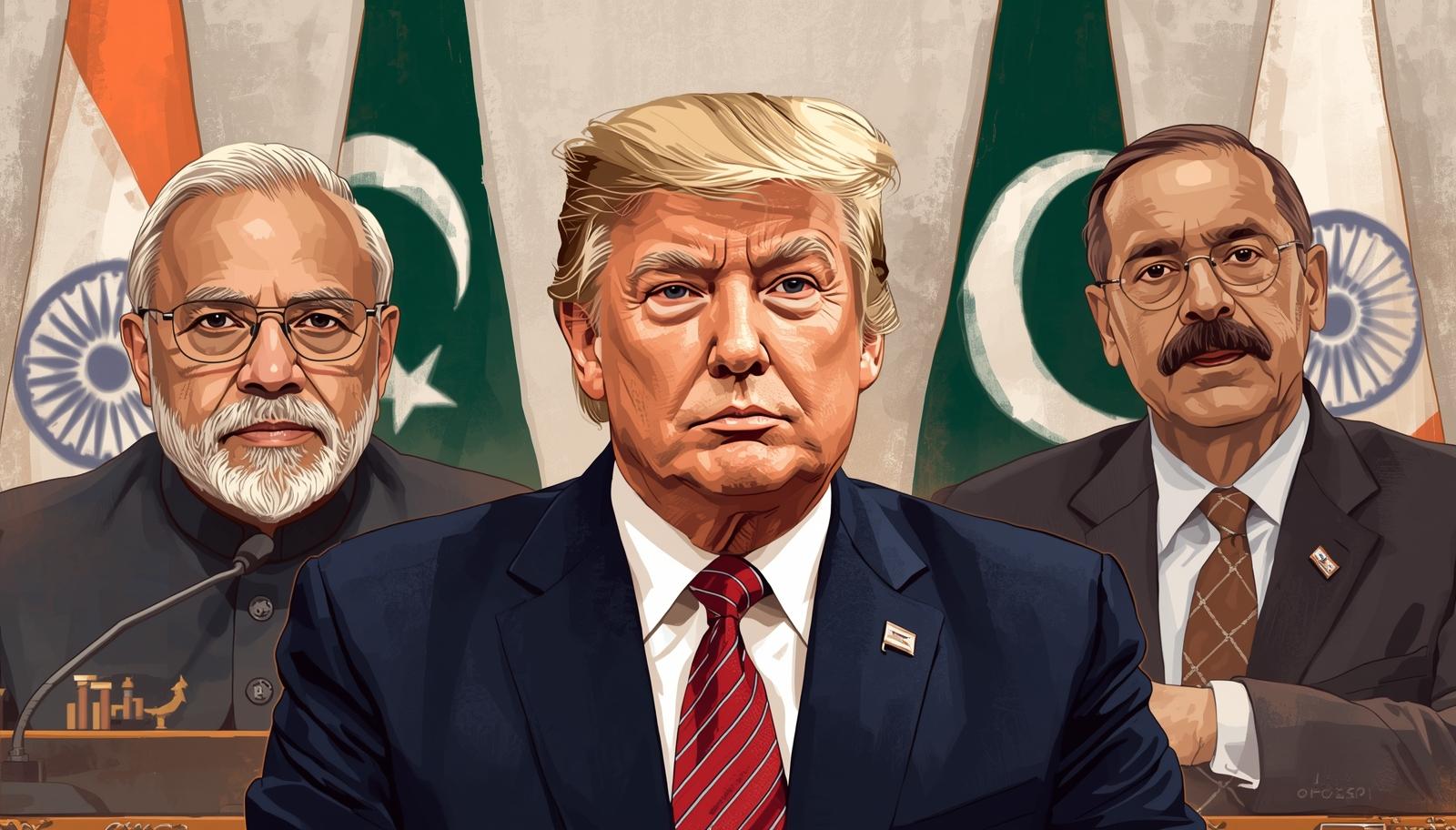
Trump went on to say, “India. How about India and Pakistan? So I did eight of them. And then I’ll tell you the rest of it.” The tone was casual but telling — part boast, part frustration. It was the kind of comment rarely meant for public consumption, which is precisely why it struck such a nerve.
Trump’s Reaction After Noticing the Camera
The mood shifted instantly once Trump spotted the camera. Turning toward it, he asked, “How are you doing? Okay?” before instructing the person behind it to leave and “enjoy your lunch.” The sudden awareness changed the dynamic of the room, highlighting just how unguarded the moment had been seconds earlier.
This wasn’t anger; it was damage control. Trump quickly pivoted back to a polished, diplomatic tone, praising Netanyahu’s delegation and emphasizing progress made during their meeting.
Why This Moment Quickly Went Viral
Hot mic moments are political gold for media outlets because they feel authentic. There’s no script, no teleprompter, no careful wording. This clip offered a glimpse into Trump’s inner monologue — his fixation on recognition and his belief that history hasn’t given him his due. In an era where perception often matters as much as policy, this moment resonated globally.
Trump and Netanyahu: A High-Stakes Conversation
The Setting: Mar-a-Lago as a Diplomatic Stage
Mar-a-Lago isn’t just a luxury resort; under Trump, it has become an unconventional diplomatic venue. World leaders visiting Trump there signals a mix of personal rapport and political alignment. Hosting Netanyahu in this setting reinforced the close relationship between the two leaders.
Netanyahu’s Visit and Its Strategic Importance
Netanyahu’s presence was significant. Israel remains a central player in US foreign policy, especially amid ongoing tensions in the Middle East. The meeting focused on unresolved issues, though Trump claimed rapid progress, saying several difficulties were resolved in just minutes.
Trump’s Praise for the Israeli Delegation
After noticing the camera, Trump praised the group warmly, calling it “a very good group” and highlighting efficiency and cooperation. This shift from candid complaint to diplomatic praise underscored Trump’s ability to switch personas instantly — a skill that has defined much of his political career.
“Do I Get Credit?” — Trump’s Nobel Peace Prize Frustration
Trump’s relationship with the Nobel Peace Prize is complicated, emotional, and impossible to ignore. Unlike many leaders who quietly accept nominations or losses, Trump has repeatedly voiced his belief that he deserves the award.
He often lists what he sees as his peace achievements — easing tensions, stopping wars, negotiating deals — and contrasts them with what he perceives as unfair recognition given to others. To Trump, the Nobel Prize isn’t just an award; it’s validation. It’s history’s stamp of approval.
The frustration caught on the hot mic wasn’t new. It was simply unfiltered.
Trump’s Claims on India–Pakistan Peace Efforts
The Background: India-Pakistan Tensions
Few rivalries are as volatile as that between India and Pakistan. With decades of conflict, nuclear capabilities on both sides, and frequent border tensions, even minor incidents can escalate rapidly. The Pahalgam terror attack and India’s subsequent Operation Sindoor reignited global concern.
Operation Sindoor and the Pahalgam Terror Attack
India’s Operation Sindoor targeted Pakistan-based terrorist infrastructure following the attack. The situation raised fears of retaliation and escalation, drawing international attention and calls for restraint.
Trump’s Assertion of Using Tariff Threats
Trump has repeatedly claimed that he personally intervened by threatening trade tariffs, forcing both sides to de-escalate. According to him, this intervention prevented a catastrophic conflict — even a nuclear war.
Whether or not one accepts this version, Trump clearly sees this as one of his crowning achievements.
Evaluating Trump’s India-Pakistan Claims
India has consistently pushed back against Trump’s narrative, emphasizing bilateral mechanisms and rejecting third-party mediation. Pakistan, on the other hand, has been more receptive to acknowledging Trump’s role, even praising him publicly.
Experts remain divided. Some argue US diplomatic pressure played a role; others see Trump’s claims as exaggerated. What’s clear is that perception matters, and Trump has built a narrative where he is the decisive peacemaker.
Nuclear War Averted? Understanding the Stakes
When Trump says he stopped a nuclear war, it’s not just rhetoric. Any serious escalation between India and Pakistan carries nuclear risk. Even if Trump’s role was limited, global leaders often operate behind the scenes, applying pressure quietly.
Still, the lack of verifiable evidence makes such sweeping claims controversial. Critics argue Trump inflates outcomes to bolster his image, while supporters credit him for bold, unconventional diplomacy.
Trump and the Nobel Peace Prize: A Complicated Obsession
Trump has been nominated multiple times, with countries like Pakistan and Israel voicing support. Yet the prize has remained out of reach. Nobel committees often favor sustained, verifiable peace efforts over transactional diplomacy.
The contrast between Trump’s self-assessment and the committee’s decisions fuels his frustration — and moments like the Mar-a-Lago hot mic bring that tension into the open.
María Corina Machado’s Nobel Win and Trump’s Silence
When María Corina Machado was announced as the 2025 Nobel Peace Prize winner, Trump remained publicly silent. This restraint was notable. Machado later thanked Trump, acknowledging his efforts for global peace and democracy, which added another layer of irony to the situation.
Trump’s silence may reflect strategic calculation — criticizing the Nobel openly hasn’t helped him in the past.
Focus Shifts to Ukraine Peace Efforts
Trump has openly admitted that Ukraine is the one conflict he hasn’t “solved.” His meeting with Ukrainian President Volodymyr Zelensky and phone call with Russian President Vladimir Putin signal renewed focus.
Ukraine is different. The stakes are higher, alliances more rigid, and outcomes far less flexible. If Trump succeeds here, it would reshape his legacy entirely.
Conclusion: Credit, Cameras, and the Cost of Power
The Mar-a-Lago hot mic moment wasn’t just a slip-up. It was a window into how Donald Trump sees himself — as a dealmaker, a peacemaker, and someone history hasn’t fully acknowledged. His frustration over the Nobel Peace Prize, his claims about India and Pakistan, and his pivot toward Ukraine all point to one thing: legacy matters deeply to him.
In a world where cameras are always watching, even private moments shape public narratives. Whether Trump ultimately earns the recognition he seeks remains uncertain. But one thing is clear — the conversation about his role in global peace is far from over.